
Choosing a health insurance plan should be simple, straightforward, and affordable. And if it were, millions of us wouldn’t be stressed out when open enrollment rolls around every year. Policies and options change. Costs increase. And some of the exchange websites can be tricky to navigate.
You may be thinking that you can barely afford the premiums anyway, so why bother going through the process. But the truth is that – as messed up as our current health”care” system is – having some type of health insurance can help you if you get seriously sick or injured.
Picking a plan can feel overwhelming. And you have only a short time to figure it all out – and figure out how to make it work in your budget. That’s why it’s extra important to make sure you choose the right plan for your family. Because picking the wrong one can end up costing you much more in the long run.
If Your Employer Offers Health Coverage
Most Americans get their health insurance through their jobs. And many have at least a portion of the costs shouldered by their employers. While workplace plans usually cost less than getting insurance on your own, those costs are continuing to rise. And as they increase, some employers are pulling back on their cost sharing. Even so, if you have access to a group plan through work, that’s probably your best bet for health insurance.
If You Have to Buy Your Own Insurance
When you don’t have access to a workplace plan, you can go through the marketplace. (You may choose a private plan directly from an insurer, but those tend to be even more expensive). If your home state has an online marketplace, that’s where your you’ll go to find out your options. Otherwise, you’ll go through the federal marketplace to buy your coverage. Either way, you can start at https://www.healthcare.gov/. That will either funnel you through to your state’s exchange or keep you on the federal site depending on your zip code.

Alphabet Soup: HMOs, PPOs, POS, EPOs
There are a bunch of different types of health insurance plans, but the main four include HMOs, PPOs, POS, and EPOs. Each of these types has its own rules, benefits, and drawbacks. Some severely limit which doctors you can see. Some offer more freedom in exchange for higher (sometimes much higher) premiums.
HMO – health maintenance organization
- Only in-network coverage available (except for emergencies)
- Need referrals for specialists and procedures
- Requires a primary care physician (PCP) to coordinate care
- Lower out of pocket costs
- Typically lower-end premiums
PPO – preferred provider organization
- Can go to any provider you want, but in-network providers are less expensive
- No referrals needed for specialists and procedures
- Higher out of pocket costs (unless you use only in-network providers)
- Typically higher-end premiums
POS – point of service plan
- Can go to any provider you want, but in-network providers are less expensive
- Need referrals for specialists and procedures
- Requires a primary care physician (PCP) to coordinate care
- Higher out of pocket costs (unless you use only in-network providers)
- Typically mid-range premiums (higher than HMO but lower than PPO)
EPO – exclusive provider organization
- Only in-network coverage available (except for emergencies)
- No referrals needed for specialists and procedures
- Moderate out of pocket costs
- Typically mid-range premiums (higher than HMO but lower than PPO or POS)
The type of plan you choose will dictate your choice of doctors and your overall out-of-pocket costs.
8 Questions to Ask Before You Choose a Plan
For most of us, the cost of premiums is a huge part of the decision-making process. For some of us, it’s really the only factor that matters. But the truth is picking a plan based just on premiums could end up costing you more depending on the type of healthcare you use, the doctors you see, and general availability in your area.
Here are 8 questions to ask yourself before settling on a plan.
- Is your doctor (or doctors) in-network?
- How important is it to you to keep seeing your current health care providers?
- Do you live in an area with limited access to doctors, labs, or hospitals?
- Do you (or anyone in your family) have a chronic health condition?
- How often do you (and the people in your family) go to the doctor?
- Are you (or anyone in your family) on medication?
- Do you (or anyone in your family) need access to mental health professionals?
- Do you travel frequently, especially outside the country?

Some Things to Keep in Mind When Choosing Health Insurance
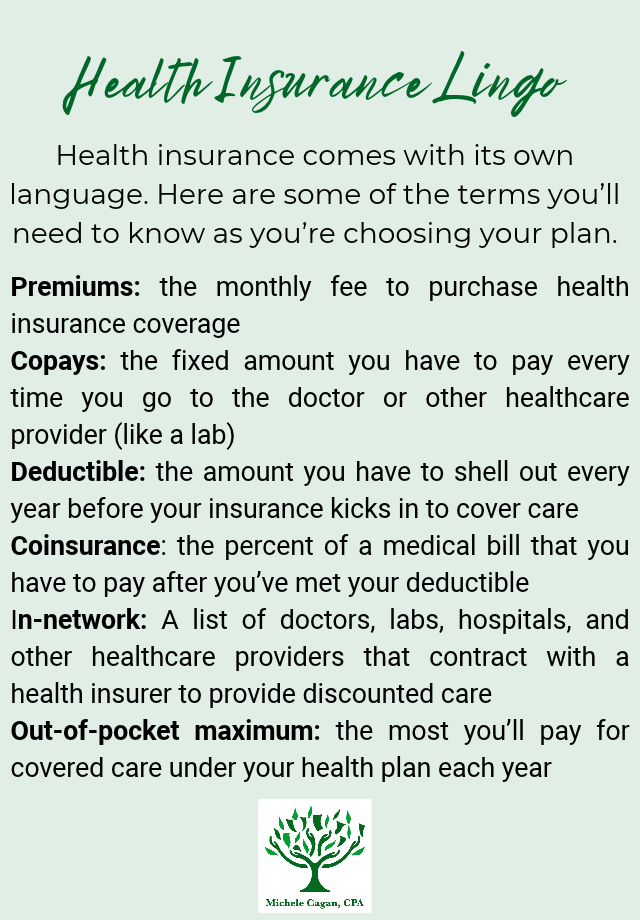
Health care costs aren’t just about the monthly premiums. When you’re making your choice, consider how much you expect to pay for out-of-pocket costs (like copays, coinsurance, and deductibles) and how much freedom of choice matters to you.
When it comes to health insurance, the higher your premiums are the more coverage you’ll have. That usually means lower copays and coinsurance, which can offset the higher premiums if you use a lot of health care services. That makes these plans a better choice if you:
- Have a chronic illness or injury
- Go to the doctor a lot
- Need regular prescription medications, especially more pricey drugs and non-generics
- Are pregnant, planning to get pregnant, or have young kids
- If anyone your family engages in high-risk sports or activities that can lead to ER visits
Lower premium plans often come with less coverage, higher copays and deductibles, and less freedom when it comes to healthcare choices. If they’re all you can afford, these plans can work as a solid safety net. And they can also be a better choice if you’re generally healthy and hardly ever need to go to the doctor.
You’ll also want to check the policy to make sure it covers the type of services you use. For example, not all policies cover fertility treatments. Some don’t cover physical therapy. There’s also a wide range of exactly what’s covered when it comes to mental health and substance abuse services.
What About High-Deductible Plans?
High-deductible health plans, or HDHPs, get hyped as the lowest cost care… but that’s not exactly true. HDHPs do typically have among the lowest monthly premiums, but you have to pay a lot out of pocket before coverage kicks in.
According to the IRS for a plan to qualify as an HDHP it has to have a deductible of $1,750 for an individual or $3,500 for a family in 2027. That means you have to pay for the premiums plus spend thousands of dollars before the insurance company begins to cover any eligible costs. These policies are limited to maximum out-of-pocket costs of $8,700 for individual or $17,400 for family coverage.
Some HDHPs cover routine preventive care regardless of whether you’ve met your deductible. This may include things like:
- An annual physical
- Health screenings like for blood pressure or cholesterol
- Standard immunizations
- Prenatal care
- Well-baby visits
- Cancer screenings like mammograms, pap smears, and colonoscopies
If you and the other people covered under your plan are generally healthy and rarely use medical care (other than for routine checks), an HDHP might be right for you. But if you do choose one of these plans, make sure you have enough in savings to cover the full deductible in case of an emergency.

The HSA Bonus
Eligible HDHPs also come with a special bonus: health savings accounts (HSAs). These are tax-advantaged accounts that work sort of like IRAs and 401(k)s except for medical expenses instead of retirement. You get to put pretax dollars into your HSA and you can spend the money at any time tax-free as long as you use it for medical expenses. And this money is yours until you spend it, unlike use-it-or-lose-it accounts that reset to zero every year.
For 2027, HSA contribution maximums are $4,500 for individuals and $9,000 for families. You can use the cash in your HSA to pay for deductibles, copays, and medical expenses that aren’t covered under your health plan, among other things. You can’t use it to pay the premiums for your HDHP.
Ready to Pick Your Plan?
Once open enrollment starts on November 1 each year, you have a limited time to purchase a healthcare plan. If you want your new coverage to take effect on January 1 (of the next year), you have to sign up by December 15.
Open enrollment ends on January 15. If you purchase your plan between December 16 and January 15, coverage starts on February 1.
After open enrollment closes, you have to wait until the next November 1 to sign up for insurance unless you qualify for a Special Enrollment Period. This applies if you go through a life event such as:
- Getting married
- Having or adopting a child
- Moving to another state
- Losing your health coverage (due to a job change, for example)
When you’re ready to make your choice, here are the steps to take:
Step 1: Visit the marketplace or your employee benefits portal to review the available health insurance plans.
Step 2: Figure out which kind of plan (such as HMO, PPO, or HDHP) will work best for your family.
Step 3: Consider all of the costs associated with each plan.
Step 4: Decide whether it’s more cost effective for your unique situation to go with a higher premium/more coverage or a lower premium/less choice plan.
Step 5: Make sure the plans you’ve narrowed down include your doctors, prescriptions, and ongoing healthcare needs (like physical therapy, for example) and eliminate any plans that don’t.
Step 6: Choose your plan.
Step 7: Make sure to pay your first premium by January 1.
And How Do You Pay For This?
That’s where my book Budgeting 101 comes in.
This book helps you keep track of your finances, so you can cover all of your bills including your health insurance.
You’ll quickly discover that having a budget is actually a benefit, not a chore. You’ll have a much better idea of where your money is going. Which means you’ll be able to save more of it and put it towards what your family needs, like healthcare.
Click on the button below to find out more about Budgeting 101 and get your copy ASAP, so you know you’ll be able to afford healthcare for you and your family.