

Life insurance is essentially financial safety for your family, should you pass away unexpectedly.
It’s not exactly a pleasant thing to think about, but you and your family will be much better off if you do it now, than if the worst happens and they have nothing to rely on financially after you’re gone.
Why You Would Need Life Insurance
If anyone depends on you financially, you need life insurance.
Because if you die before the people who depend on you can take care of themselves, they will desperately need financial support. This is one type of insurance policy that parents especially – but honestly, anyone with financial dependents – won’t want to skimp on.
A lot of people get some amount of life insurance through their jobs. But it’s typically not enough coverage to keep your dependents going. That’s why it’s so important to figure out how much life insurance your loved ones will need to carry on without you and buy a policy.
How Life Insurance Works
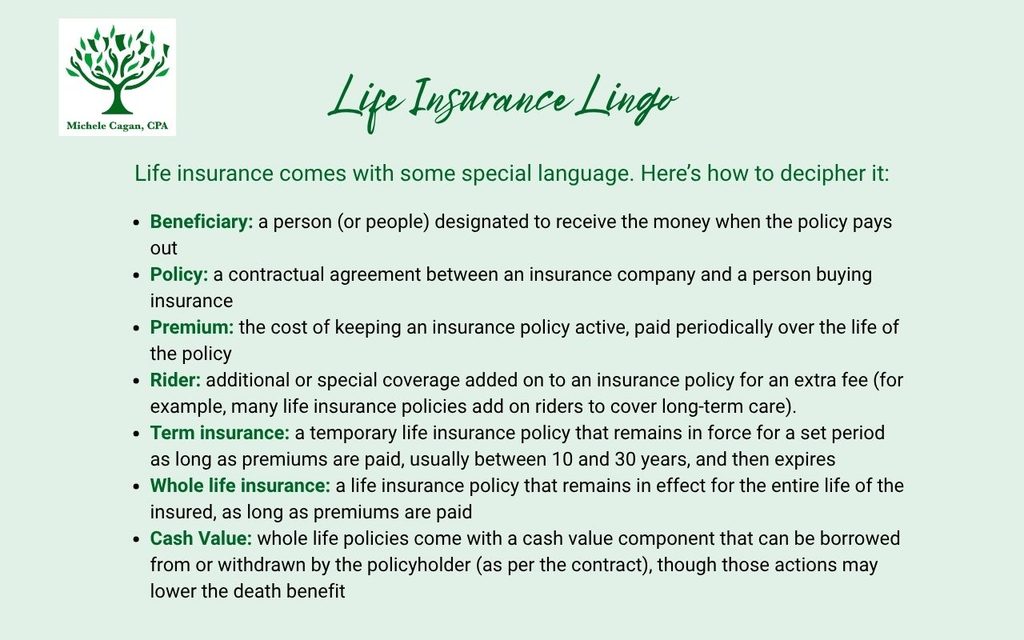
Like all kinds of insurance, with life insurance you pay premiums in return for financial protection called coverage. In this case, the coverage kicks in if you – the policyholder – dies. When that happens, the insurance company pays out the death benefits (the amount of coverage) to your beneficiaries once they’ve presented a death certificate and completed a claim form.
Life insurance proceeds go to beneficiaries completely tax-free. They bypass probate and the estate as long as the named beneficiary is a living person (or people). That allows the beneficiaries to receive the much-needed proceeds quickly, reducing financial distress in the time of grief.. It also keeps the proceeds completely private, unlike probate which becomes part of a public record.
Do You Need Life Insurance?
If you’re not sure whether you need life insurance, here are some guidelines you can use to figure that out.
You probably need life insurance if:
- You’re the main earner for your household
- You’re a stay-at-home parent (providing unpaid but crucially necessary care to your family)
- You have dependents who rely on you financially
- You’re a small business owner and want to make sure your heirs and/or business partners can carry on
- You have co-signed debt and don’t want to leave your co-signor responsible for paying it off
- You don’t want loved ones to worry about covering your final expenses
If any of those apply to you, you’ll want to look into life insurance. Your next step wil lbe figuring out how much coverage you need.
Figuring Out How Much Life Insurance You Need
When it comes to life insurance, it’s important to figure out how much life insurance coverage you think your family will need. And then, if you can swing it, buy a little more than that.
One common estimating tool called the DIME method can help you come up with a reasonable coverage amount for your specific situation:
D is for Debt:
Add up all of your debt except your mortgage (it gets it’s own section). Include your car loan, private student loans, credit cards, medical bills, and every other debt you owe. You don’t need to include federal student loans (including PLUS loans) because those get discharged on death. Once you have that total, tack on a reasonable amount for your funeral expenses. According to CNBC, the average funeral cost for 2026 is around $6,300.
I is for Income:
When people depend on you and your income to survive, a sudden loss can cause devastation. That’s especially true with children involved, or other family members who rely on your financial support. A main goal of life insurance is to provide that ongoing support for as long as it would be needed, so your goal is to make sure you have enough coverage to provide that.
Take your current income and multiply it by the number of years your dependents will likely need to rely on that money. For example, if your only dependents are children, multiply your current income by the number of years until your youngest child will reach age 25. [Note: Most people use age 21 for this, but in my and many of my clients’ experiences, adult children often need some support too.]
Then take that number and multiply it by a reasonable inflation factor. After all, your current earnings would typically increase at least somewhat, and expenses definitely will. Normal inflation runs between 2% and 3%, though recently it’s been closer to 3.5%… with some regular expenses like gas and food increasing by even more.
Here’s how this looks. Say you make $70,000 a year. You have 2 dependent children, and the youngest is 13. That means you would need to provide support for 12 years (25 – 13 = 12). Using an inflation factor of 3%, your numbers would look like this:
$70,000 x 12 years = $840,000 x (1.03)^12 = $1,197,639 (approximately $1.2 million)

M is for Mortgage:
For most families, the mortgage is the biggest debt they have. And since that debt is tied directly to your home, it’s crucial to make sure it’ll be taken care of. The first priority here is to continue making mortgage payments until the dust has settled and the family know their options and what they want to do about the property. They’ll have a few options including:
- Paying off the mortgage in full using life insurance proceeds or other available funds.
- Continuing to make payments on the existing mortgage. This works if the survivor is either named on the loan, a surviving spouse, or named as the person who inherited the house. This is called assuming the mortgage. Heirs are not required to qualify for this, as long as they continue to make timely payments.
- Refinancing the mortgage to lower the monthly payments.
- Selling the home.
In the context of life insurance, some financial advisors recommend getting enough to pay off the mortgage, easing the monthly expense burden on the surviving family members. However, if that would send the life insurance premiums too high, there are other options (as mentioned above) that allow the family to stay in the house without paying off the mortgage in full.
Still, as part of the DIME equation, include the payoff amount for the mortgage. This gives your family the option to pay the balance and own the home outright. This can be a huge comfort for family members in a very turbulent time.
E is for Education:
This comes into play when you have children and plan to help pay for their higher education. College costs can be astronomical, and student loans can seriously undermine anyone’s fimancial future. Including this potential cost in your life insurance coverage can help your kids manage their futures without extreme stress and crippling debt.
To include this in your life insurance calculations, you need to start with an estimate of your children’s future college costs. The easiest way is with an online college cost calculator:
Here are a few resources to help with that:
Charles Schwab College Savings Calculator
Big Future – How Much Will College Cost?
My 529.org – College Savings Estimator
The Whole DIME: Once you’ve figured out the amount you’ll need for each category, total them up to calculate your total coverage needs.
You can download my DIME Method Life Insurance Worksheet to help you figure out how much life insurance you’ll need.


Need Some Help Figuring Out What You Need??
I get it. There’s a lot to think about here. You want to make sure your family is protected but you also don’t want to spend a small fortune on something that won’t serve them well.
I can help you figure out what kind of insurance you might need and show you how to figure out how much coverage you should have during a personal financial coaching session
I am not an insurance agent. I am a CPA. I can help you evaluate your financial situation, sort through all the options and help you make the best decision for you and your family. Then you can go to an insurance agent with a plan in place, so you know you’re getting the right policy to support your family, should the worst happen.
These personal financial coaching sessions are designed to help you understand your current financial situation and to plan for your future, so you can make the best decisions possible for both. No one can see the future. But having the right plan in place for your family, should you not be there for them, is a gift of security you can give them now.
A single session is $250 and we can get a lot done in that time. Depending on your situation, one session may be all you need to figure this out..
Click on the button below to schedule your personal financial coaching session now.